



你要买什么?
A gas station owner in Henan converted 40 mu of land into a "solar-storage-charging" superstation—what a sharp business mind!
Nov 18, 2026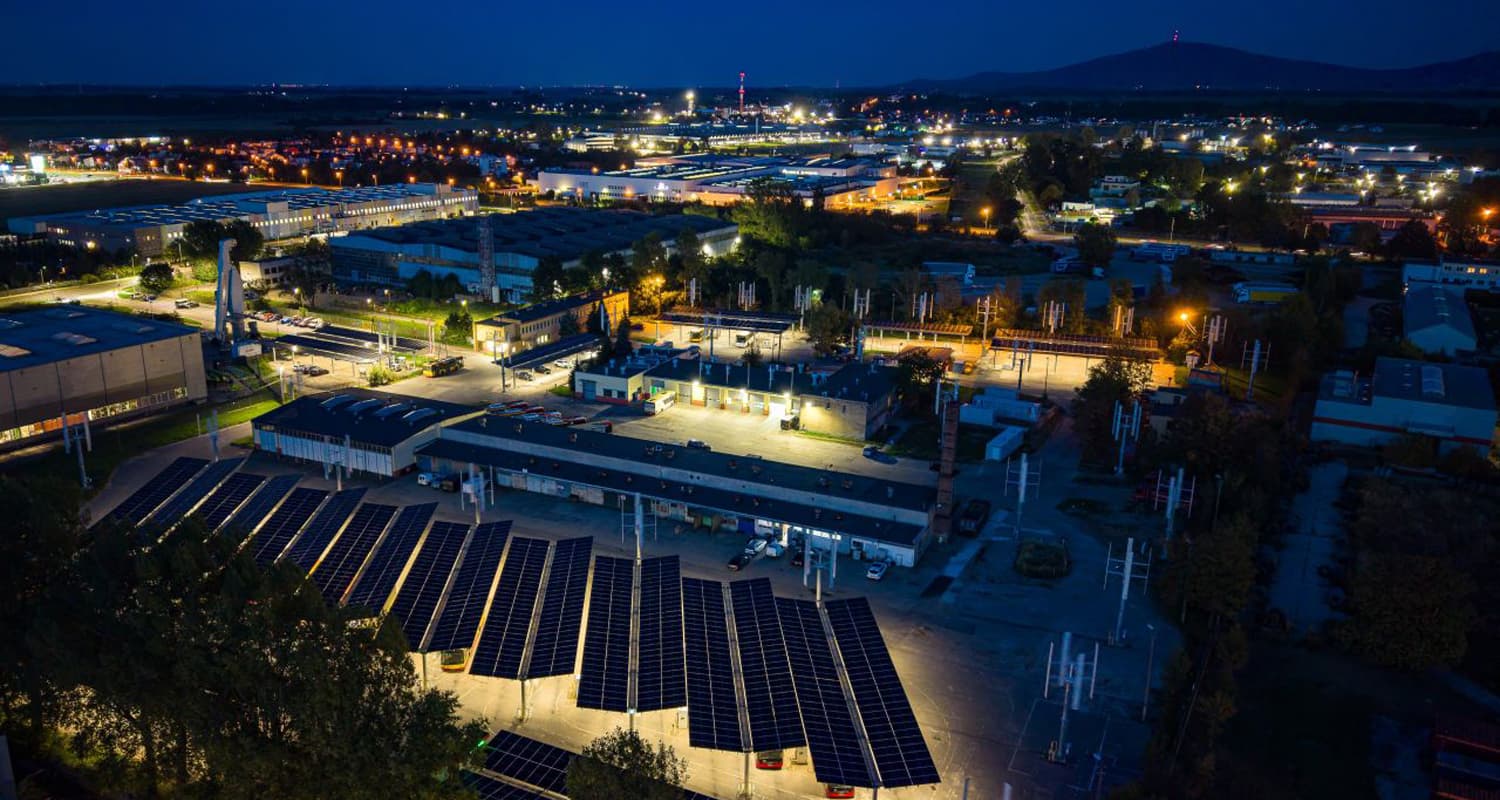
After operating for over a decade and subsequently sitting idle for several years, a former gas station has been transformed into a "solar-storage-charging" supercharging hub. With an investment of 80 million yuan and spanning 40 mu (approximately 2.67 hectares), the facility features a 5 MW solar power installation and 60 charging piles, offering a uniform pricing structure for both large and small vehicles.
Recently, video blogger "Renbang Afei" visited the site in the Macun District of Jiaozuo, Henan Province, where the investor provided a personal tour. After watching the video, my immediate takeaway was that the owner possesses a remarkably sharp business acumen.
The site was originally a gas station—a business the owner had operated in Jiaozuo’s Macun District for over a decade, benefiting from an excellent, highly accessible location before it eventually fell into disuse. While the transition from a gas station to a charging hub might appear to be merely a change in equipment, the underlying business logic remains consistent: both models generate revenue by capturing vehicles that stop to refuel—or, in this case, "recharge." The primary difference lies in the medium (electricity instead of gasoline) and the duration of the stop, which extends from a few minutes to tens of minutes or even an hour or more.
Rather than demolishing the old facility, the investor chose to build upon the existing foundation. The 40-mu site was reconfigured to integrate solar panels, designated charging bays, and amenities for drivers, such as dining and rest areas. While the utilization of the land has evolved, the core strategic decision—positioning the business at a key intersection to intercept passing traffic—remains unchanged.
The solar component utilizes top-tier TOPCon photovoltaic panels, implemented through a self-investment model. With a 5 MW capacity installed across the 40-mu plot, the solar-generated electricity is first directed into an energy storage system, which then supplies power to the charging piles. This "store-then-charge" approach allows the site’s energy consumption rhythm to operate independently of the power grid’s peak and off-peak pricing cycles.
For the charging infrastructure, the facility employs equipment from TELD (Tebian Electric/Telai-dian). TELD (TGOOD E-Charging) offers an extensive product line for high-power charging. Its liquid-cooled terminals for passenger vehicles can reach up to 1000kW per connector, while its automated charging robots—designed for heavy-duty trucks and logistics vehicles—support up to 1600kW. With all 60 charging piles integrated into TELD’s proprietary system, power dispatching and back-end management are unified under a single framework.
According to an investor, the project went into operation in the autumn, missing the peak electricity demand of the summer. Currently, the site generates tens of thousands of kilowatt-hours of electricity per day—a detail confirming that the photovoltaic (PV) system is fully operational, even if it missed the most profitable window during its first year.
A significant portion of the video focuses on amenities for drivers. The on-site restaurant serves meals starting at 11:00 AM, and drivers of heavy-duty trucks can eat for free while charging. The shower facilities include standing showers and washing machines, complete with specialized humidity-control systems. The lounge is equipped with electrically adjustable recliners, and a convenience store is currently in the works. Furthermore, there is an organized dispatch system in place: once a vehicle is fully charged, it can be moved to a designated parking area, freeing up the charging bay for the next group of vehicles.
Within a "super-charging" station that required an 80 million RMB investment, these amenities might seem "light" or secondary. Yet, it is precisely these "light" touches that determine whether drivers choose to visit—and, once there, whether they decide to stay longer.
There is a fundamental difference between charging electric heavy-duty trucks and passenger vehicles. While passenger car owners can simply leave once charging is complete, long-haul truck drivers must stop as a necessary part of their journey. If a driver is forced to sit idly in their cab for 30 to 60 minutes, the charging station becomes nothing more than a cost—a drain on their time and resources. However, by providing a hot meal, a shower, and a place to rest, the charging station transforms into a rare sanctuary on the road—a spot where drivers can truly catch their breath. By offering free meals, showers, and rest areas, the operator may appear to be sacrificing profit; in reality, they are leveraging these services to extend the time drivers spend at the site, which in turn ensures a more stable and consistent flow of vehicles. Based on industry data for 2026, the payback period for integrated solar-storage-charging stations generally ranges from 4 to 6 years; in regions with significant peak-to-valley electricity price differentials, this can be reduced to 4–5 years. Whether such a station is financially viable depends less on the equipment itself and more on two key variables: the cost of grid capacity expansion and the utilization rate.
Grid capacity expansion typically accounts for 35% to 50% of a station’s total investment, representing the single largest expense. In this configuration, the primary value of energy storage is often not merely "storing green energy," but rather avoiding the need for grid capacity upgrades by alleviating the load pressure on transformers. By incorporating energy storage, the electricity generated by solar panels can be stored before being used for charging; effectively, the storage system acts as a buffer, mitigating the instantaneous impact of charging loads on the power grid.
Another critical variable is the utilization rate. For stations primarily serving heavy-duty vehicles (such as electric trucks), the break-even point for an individual charging pile is roughly 15% utilization. Reaching a utilization rate above 25% yields significant returns, potentially shortening the payback period to 3–5 years. By equalizing electricity prices for both heavy-duty and light-duty vehicles—and offering perks like free meals and shower facilities to encourage drivers to stop—investors are essentially striving to "keep the charging piles busy." Every incremental increase in utilization helps dilute the impact of the initial 80-million-yuan capital expenditure.
Currently, the concept of integrated solar-storage-charging stations is no longer niche. Statistics indicate that in the first half of 2026, the number of newly constructed integrated solar-storage-charging stations exceeded 12,000, with a penetration rate of approximately 25% within the public charging sector. In Jiaozuo, Henan Province, for instance, many similar projects are emerging rapidly. One such project in the Shanyang District, for example, includes 215 fast-charging piles, 4.24 MW of solar capacity, and 54 MWh of energy storage, with an estimated contract value of approximately 125 million yuan—a scale comparable to the project in the Macun District. In Yuzhou, Henan, a provincial-level demonstration charging station for heavy-duty trucks has been put into operation, featuring 40 charging bays supported by a 3.08 MWp photovoltaic (PV) system.
Within the broader landscape, the significance of this station in Macun District lies not in it being the "first of its kind," but in its successful revitalization of a site previously used as a gas station. The existing layout—including the site footprint, entry and exit points, and its strategic positioning relative to the road—represents assets that would otherwise be costly and difficult to secure for a newly developed site. By opting to retrofit an existing property rather than acquiring new land in a remote area, the investor significantly reduced both land and time-related costs.
While the transition from operating a gas station to an electric vehicle charging station might seem like a major leap, the core focus has remained consistent: addressing where vehicles park, where drivers spend their time, and how revenue is generated. The only real change is the product being sold—electricity instead of gasoline—now supplemented by a complimentary hot meal and a comfortable chair where drivers can rest.
 首页