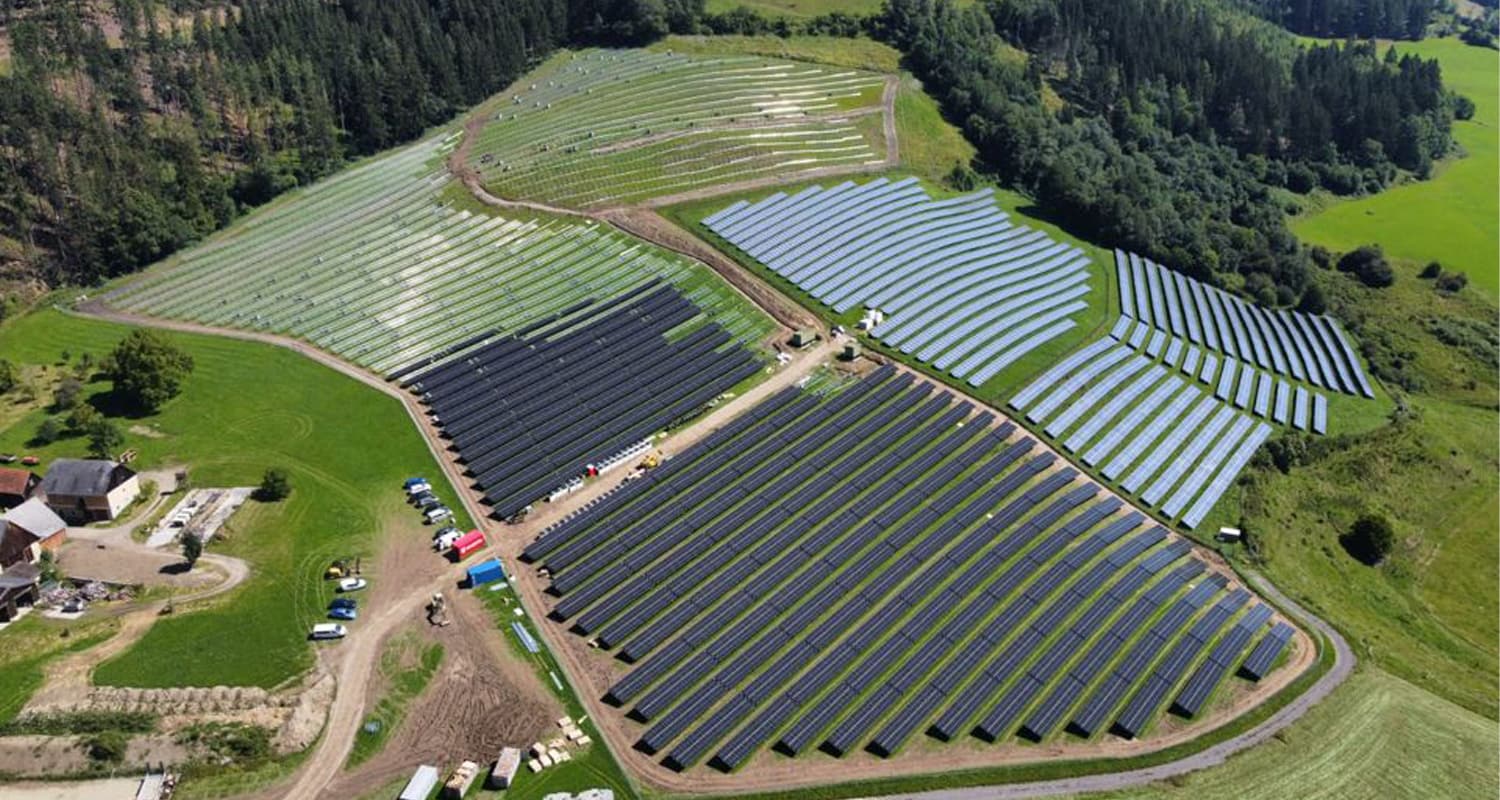

European inverter manufacturing capacity has bucked the trend and surged, reshaping the global photovoltaic manufacturing landscape.

Aug 05, 2026

In the coming years, the global photovoltaic inverter industry will undergo a major restructuring, reflecting a profound reshuffling of the global manufacturing landscape. While the market may experience short-term adjustments, the localization of supply chains and the relocation of production capacity overseas are inevitable trends.


The European and American markets are fully implementing local manufacturing strategies, with Europe leading the wave of returning factories. This contrasts sharply with the photovoltaic module sector, where Chinese manufacturers still hold absolute dominance.


A Turning Point in the Global Manufacturing Landscape


Since 2021, the global inverter production capacity landscape has undergone dramatic changes. In 2024, China's inverter production capacity will reach a historical peak, controlling nearly 85% of the global manufacturing share—a result of years of continuous large-scale capacity expansion in China.


However, 2024 will become a watershed year for the industry. It is anticipated that Europe and the United States will introduce a series of industrial policies, prompting global manufacturers to adjust their production capacity layout. In March 2024, the EU officially implemented the Net Zero Industry Act, which explicitly requires that by 2030, at least 40% of the annual new net zero equipment installations, such as photovoltaic inverters, in the EU must be domestically manufactured.


This act provides long-term policy certainty for European companies building factories and grants priority to EU-made equipment in government procurement. European inverter manufacturers subsequently embarked on large-scale capacity expansion.


By 2026, the effects of this industrial transformation were evident. Europe's total photovoltaic and energy storage inverter production capacity exceeded 100 gigawatts (GW) of AC, making it the world's largest inverter production region outside of China, surpassing the US (40 GW) and India (20 GW) in capacity, and becoming a core region for global manufacturing growth.


European inverter capacity explosion, with domestic companies holding absolute dominance


The expansion of inverter production in Europe differs fundamentally from the photovoltaic module sector: by 2026, over 90% of Europe's 100 GW of total capacity will be held by European-based companies.


Germany's SMA Solar boasts Europe's largest production base, with a domestic capacity of 40 gigawatts; Spain's Power Electronics follows closely behind with a 25-gigawatt domestic factory. This demonstrates that Europe is genuinely cultivating its domestic industrial capacity, rather than simply attracting overseas factories.


Established European manufacturers like SMA leverage decades of experience in power electronics technology and a mature global customer base to solidify their market advantages. They are also significantly expanding their domestic production lines, taking advantage of EU support policies and the need for global supply chain security.


The EU has established a comprehensive policy framework, restricting the import of Chinese inverters while subsidizing domestic manufacturing. In May 2026, the European Investment Bank introduced new financing rules, excluding new energy projects using equipment from "high-risk countries" from receiving preferential loans; simultaneously, projects using Chinese inverters will no longer be eligible for various EU industry subsidies. These policies are forcing developers to prioritize the purchase of European and allied equipment.


These measures also address Brussels' cybersecurity concerns: previously, over 60% of Europe's inverters were imported from China, and policymakers believe that high dependence on core energy equipment in a single geographical region poses a security risk to critical infrastructure.


Europe's industrial approach differs from simply attracting foreign investment; its policies clearly support the expansion of domestic companies. This contrasts sharply with the photovoltaic module industry: European module production capacity is primarily dominated by locally based Chinese companies, such as Trina Solar's 1.5 GW heterojunction module production in Spain and Yidao's planned 3 GW factory in France. European module manufacturers lack cost competitiveness, with several local companies, including Norwegian Crystal and Dutch Exasun, having already declared bankruptcy.


Chinese-invested inverter companies have a very low share of European production capacity.


While Huawei and Sungrow Power have leading global inverter sales, their manufacturing footprint in Europe is extremely small, severely disproportionate to their market share.


Huawei has been operating a 3 GW inverter factory in the Netherlands since 2015, with no expansion plans for over a decade, essentially maintaining a stopgap measure.


Sungrow Power's Polish factory is the largest recent Chinese investment project in Europe, officially announced in February 2026. With a total investment of €230 million, it will be located in the Wałbrzych Special Economic Zone, with a planned annual production capacity of 20 GW of inverters and 12.5 GW of energy storage systems. The factory is expected to begin production within 12 months, creating 400 local jobs. It will be Sungrow Power's first manufacturing base in Europe, with other factories located in China, India, and Thailand.


Once the Polish factory reaches full capacity in 2027, the proportion of total production capacity from Chinese companies in Europe will increase from less than 10% to approximately 20%, with European manufacturers still controlling 80% of the regional capacity. This situation is highly unique given the current environment where Chinese manufacturers dominate most new energy product categories.


The entire European industrial strategy is built around four core objectives: reducing reliance on supply chains from geopolitically sensitive countries, ensuring grid security through unified EU equipment standards, creating numerous high-quality jobs in local factories, and building a diversified supply network in collaboration with allied manufacturers, balancing industrial security and economic benefits.


Industry Outlook


Global inverter shipments are expected to decline in 2025-2026, but European manufacturers are more resilient to economic cycles. Their large domestic market provides stable shipment volumes, and policy barriers prevent competition from low-priced overseas products.


Chinese inverter manufacturers face a dilemma: either rely on limited local European production capacity or export products to cope with increasingly stringent trade restrictions.


The competitive landscape in the European and American markets is gradually becoming clearer: at least in the inverter sector, local companies are regaining their domestic market share. Whether this local manufacturing model can be replicated in the photovoltaic module sector, where the cost gap is even larger, remains a key question for the industry.


The European inverter industry proves that with sound policy support, strong technological competitiveness, and long-term strategic investment, European and American new energy equipment manufacturers can absolutely compete with Chinese companies.


As trade rules and mandatory localization requirements continue to reshape the global manufacturing landscape, the European inverter industry may become a model, providing a reference for other technologies, balancing climate goals in other regions, industrial strategies, and geopolitical competition.

留言

留言
如果您对我们的产品感兴趣并想了解更多详情,请在此留言,我们会尽快回复您。
提交

首页

产品

whatsapp

接触