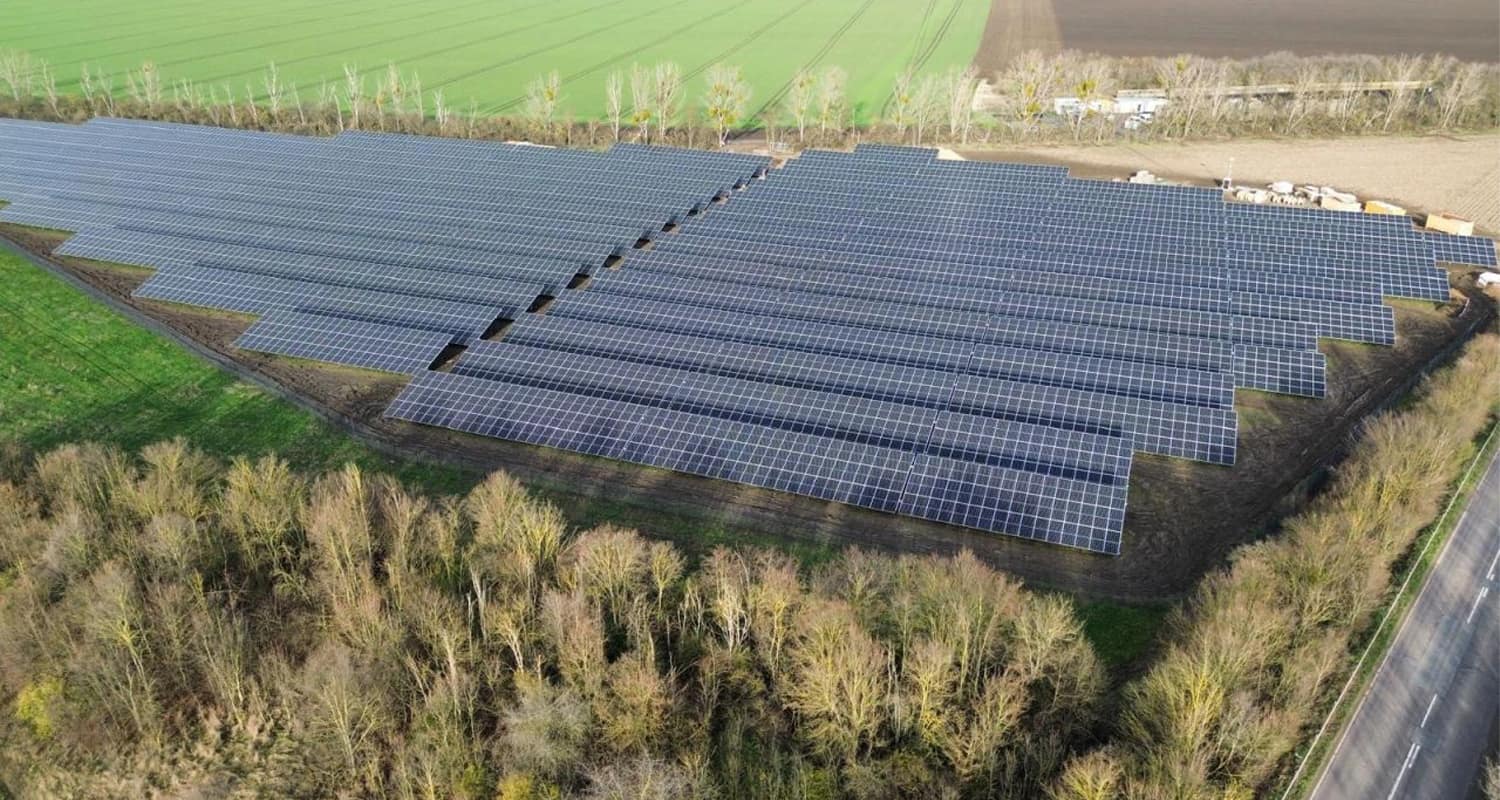

A fire broke out at an energy storage power station that had been operating for nearly 10 years!

May 07, 2026

Just this past May Day holiday, another energy storage power station caught fire.

It has been learned that on May 1st, a fire broke out in a lithium-ion battery energy storage container at the Laford Energy Storage Power Station, located in Mansfield, Nottinghamshire, UK. The power station, situated on the site of the former Laford coal mine, employs a unique double-layer stacked energy storage design with a capacity of 7.5MW. It was developed and integrated by Noriker Power and uses lithium-ion batteries supplied by LG.

It is understood that the power station officially commenced operation in 2017 and is the seventh energy storage power station to go into operation in the UK.

Upon receiving the alarm, four fire stations, including Mansfield and Ashfield, dispatched multiple fire engines to the scene. They found the fire concentrated in a single lithium-ion battery energy storage container, producing a large amount of thick smoke. The fire department immediately advised nearby residents to close their doors and windows and avoid going outside.

The fire department stated that the fire is now under control, with no injuries and only a single energy storage container damaged. The specific cause of the incident is under investigation, but preliminary investigations suggest it may be related to thermal runaway of the lithium-ion battery or equipment malfunction.


Several energy storage power station fires in the past six months

This fire at the Laford energy storage power station in the UK is the second publicly reported energy storage power station fire overseas this year.

Just four months ago, on January 21st, a battery storage device caught fire in the parking lot of a shopping mall in San Marco, California, forcing several businesses to close. The fire originated in a battery storage system (supporting) a Tesla electric vehicle charging station in the parking lot.

Although the fire was brought under control within an hour and confined to the battery pack casing, workers will remain on site to monitor for any further issues until the device can be completely removed.

And these aren't the only energy storage power station fires in the past six months.

Last December, a fire broke out at an energy storage power station facility of Convergent Energy and Power in the Warwick area of ​​New York.

The Warwick government stated that the energy storage system was fully charged when the fire occurred and was subsequently reduced to 50% for safety reasons. A fire alarm was triggered at the battery energy storage system (BESS) facility, activating an emergency response. Fortunately, the fire was contained, and no one was injured.

The Warwick mayor's office stated that during the fire, the concentration of hydrogen cyanide detected near the facility reached 0.5 parts per million, approximately half the federal safety limit. Subsequent reports indicated that the fire was caused by the use of an unauthorized energy storage system at the power station.


Why LG again?

This latest fire at a UK energy storage power station has once again drawn attention to LG, the battery supplier. In recent years, news of LG lithium battery fires has been frequent.

On February 18th last year, a fire broke out at the Moss Landing energy storage power station in the US. This was the fourth fire at the station, occurring only a month after the previous one at the same location. Around 3:15 PM on January 16th, 2025, the energy storage facility in the first phase of the power station malfunctioned and caught fire, destroying approximately 40% of the storage batteries.

According to local firefighters, a statement from the power station operator, Vistra, stated that smoke was detected at the original incident site at 6:30 PM on the 18th, prompting the company to call the fire department. Firefighters confirmed the presence of flames using drones. The fire continued to burn until around 8 AM on the 19th, resulting in the destruction of over 70% of the power station's equipment. The energy storage batteries used in the project were supplied by LG Energy Solutions. On November 18, 2024, a fire broke out in a residential energy storage system at a home in Werne, North Rhine-Westphalia, Germany. The system involved was from the German energy storage company E3/DC and used LG batteries. E3/DC is planning to replace the LG batteries from the same batch.

E3/DC stated that photos taken during the firefighting operation in Werne on November 18, 2024, confirmed that the fire involved a residential energy storage system, S10E 6.5, using battery modules from manufacturer LG Energy Solution. This energy storage project was installed and put into operation in 2019.

The fire at the energy storage station has added uncertainty to the safety of this long-established battery manufacturer.


How to protect aging energy storage batteries?

This UK energy storage fire further highlights the risks associated with aging existing energy storage facilities and inconsistent maintenance standards in the region. The UK National Fire Chiefs' Committee (NFCC) has updated its fire safety guidelines for grid-scale battery energy storage systems, introducing a more detailed risk assessment framework covering site design, emergency response, and system operation.

From a timeline perspective, many energy storage stations that were put into operation years ago are now over 10 years old. Compared to newly operational stations, the potential fire risk of these older stations is significantly higher due to external corrosion, maintenance oversights, and other factors.

So how can we prevent fires in these older energy storage stations that have been in operation for many years?

Firstly, from an operational perspective, regular inspections and assessments are crucial. Professional equipment should be used to periodically test parameters such as battery internal resistance, voltage, temperature, and capacity to assess the battery's state of health (SOH) and remaining lifespan. A Battery Management System (BMS) should be used to monitor battery operating data in real time to promptly detect abnormal fluctuations or potential faults.

In terms of operation, optimized charge and discharge management is essential to avoid overcharging and discharging. The depth of charge and discharge should be controlled within a reasonable range (e.g., 20%-80%) to reduce the loss from internal chemical reactions within the battery. A smart charging strategy is adopted to adjust the charging current and voltage based on the actual battery condition and environmental conditions, preventing overcharging or over-discharging.

Furthermore, thermal management should be strengthened. For liquid-cooled or air-cooled systems, the level, flow rate, and heat dissipation effect of the cooling medium should be checked regularly, and dust and debris on the heat sinks should be cleaned promptly.

Regarding equipment, battery connections and terminals should be checked regularly for looseness or corrosion, and damaged components should be tightened or replaced promptly. Batteries that are severely aged or have significantly degraded performance should be replaced immediately to avoid safety accidents caused by battery failure.

For newly commissioned or planned energy storage power stations, products from reputable brands or those with mature and comprehensive after-sales service and maintenance systems should be selected whenever possible. After all, energy storage power stations are not ordinary consumer goods and need to guarantee corresponding support and maintenance from the manufacturer for a period of over ten years.

留言

留言
如果您对我们的产品感兴趣并想了解更多详情,请在此留言,我们会尽快回复您。
提交

首页

产品

whatsapp

接触